

The Differences Between Managing and Leading – And Why It Matters
In the workplace, “manager” and “leader” are often used interchangeably. While they share some similarities, they are not the same. Understanding the distinction between managing and leading can make a significant difference in how businesses operate, how teams perform, and ultimately, how successful an organization becomes. So, what sets them apart, and why does it matter?
Management vs. Leadership: The Key Differences
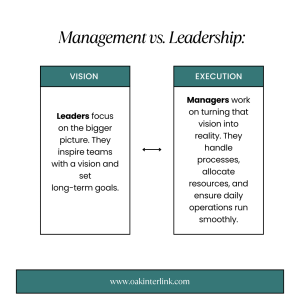
1. Vision vs. Execution
- Leaders focus on the bigger picture. They inspire teams with a vision and set long-term goals.
- Managers work on turning that vision into reality. They handle processes, allocate resources, and ensure daily operations run smoothly.
A leader might ask, “Where do we want to be in five years?” while a manager asks, “What steps do we need to take today to stay on track?”
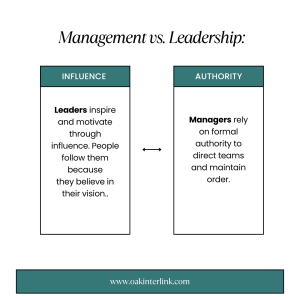
2. Influence vs. Authority
- Leaders inspire and motivate through influence. People follow them because they believe in their vision.
- Managers rely on formal authority to direct teams and maintain order.
A great leader earns loyalty through inspiration, while a great manager ensures efficiency through structure.
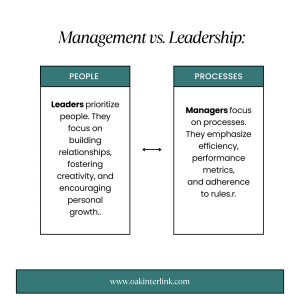
3. People vs. Processes
- Leaders prioritize people. They focus on building relationships, fostering creativity, and encouraging personal growth.
- Managers focus on processes. They emphasize efficiency, performance metrics, and adherence to rules.
While leaders empower teams, managers keep everything running smoothly.
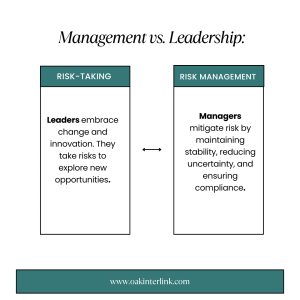
4. Risk-Taking vs. Risk Management
- Leaders embrace change and innovation. They take risks to explore new opportunities.
- Managers mitigate risk by maintaining stability, reducing uncertainty, and ensuring compliance.
A leader might push for a new, bold strategy, while a manager ensures the strategy is executed safely.
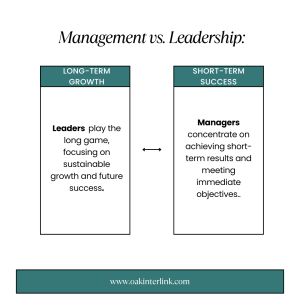
5. Long-Term Growth vs. Short-Term Success
- Leaders play the long game, focusing on sustainable growth and future success.
- Managers concentrate on achieving short-term results and meeting immediate objectives.
Both are necessary—leaders shape the future, and managers keep the present on track.

Why Understanding the Difference Matters
1. Stronger Teams and Organizations
Recognizing the balance between leadership and management helps organizations build well-rounded teams. Companies need both visionaries and executors to thrive.
2. Employee Engagement and Retention
People don’t just leave companies; they leave managers. A good leader can inspire and retain talent, while an effective manager can provide structure and clarity. The right combination keeps employees motivated and engaged.
3. Adaptability in a Changing World
In today’s fast-paced business landscape, organizations must be both agile and efficient. Leaders drive change, while managers ensure a smooth transition. Companies that embrace both functions can better navigate uncertainty.
Both leadership and management are essential for success. The best organizations—and the best professionals—know when to lead and when to manage. By balancing vision with execution, influence with authority, and innovation with structure, businesses can build strong teams that achieve lasting success.
Are you more of a leader or a manager? Understanding your strengths can help you grow in your career and make a greater impact in your organization.